The collapse of Australia’s greatest river system is now the subject of a documentary on European television.
The French TV crew have spent weeks researching and filming their report, which is expected to strengthen international condemnation for the way Australian States and the Commonwealth have managed the Murray and Lower Lakes.
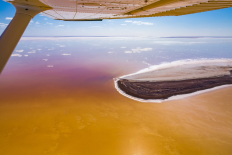
The crew could not travel around the Lower Lakes by boat – there wasn’t enough water, so they were forced to go by hovercraft to see the dried-out Reedy Creek in the Mud Islands area of the lower Lake Alexandrina.
Pyrites-rich acid sulphate soils have been tested at ph1.5 in this region. Acid measured at this extreme level is the same level as that contained in car batteries, strengthening arguments that without fresh water, the best solution may be what was previously unthinkable: that is, to flood the lakes with sea water.
Using $10 million provided by the commonwealth, community nurseries in the Coorong, Lower Lakes and Murray mouth are propagating plants for what the government called “revegetation” around Lakes Albert and Alexandrina.
More accurately, it’s “vegetating” – the land on which the seedlings are being planted were previously under water, and therefore had no terrestrial plants at all.
At the same time as the French documentary was being prepared, the State Government, with Opposition support, extended the hours Adelaide irrigators can water their suburban gardens.
And River Murray Minister Karlene Maywald this month increased irrigation allocations from 34 to 46 per cent.
“This is good news for SA irrigators who have been doing it tough in the midst of one of the worst droughts on record,” she said on November 2.
By the following week, Ms Maywald also had to announce an extension of sand pumping to keep open the Murray Mouth, which would otherwise silt up because of low to zero outflows.

Meanwhile, the Lower Lakes are unfit for drinking. Communities which had used the lakes for fresh water now rely on pipes to take water from further upstream under a $120 million federally-funded project.

Water levels in the Murray itself, though, continue to fall as millions of litres are pumped from the river into a new, artificial impoundment that has become the Goolwa channel.